Planting 1,ooo bulbs at a time

Read on for a quick and efficient way for one person to plant a thousand bulbs in a few hours, without a tractor, without digging up large patches of ground and without digging a thousand individual bulb holes.  With the help of a half-dozen chickens and a toddler trying to ride my back like a pony, I planted a thousand crocus in four hours.

Van Engelen‘s Wholesale Flower Bulbs has a late season sale each year in November, which is how I happened to come by 1,000 crocus for $50.00.  I would have ordered 500, but they have a $50 minimum order, so 1,000 it was…  my husband murmured something about never doing anything by halves… I knew that planting a thousand crocus would be a way of establishing something to look forward to through the long winter.  img_0107
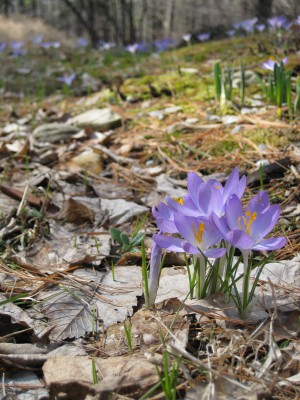
I Googled “planting thousands of bulbs” and found that Martha Stewart has a post on planting thousands of bulbs, and she uses a tractor to dig large patches of ground to plant dozens of bulbs at once.  However, I wanted a minimum of ground disturbed (I wanted these crocus in sweeps across the lawn and in garden beds, not in massed bed plantings), and I also didn’t want to dig a thousand holes in the ground. I needed a happy medium between digging up large sweeps of ground and a thousand holes.  And I needed to do it quickly, being late November/early December.

Necessity is the mother of invention and all that… I devised a plan and then, with the help of a half-dozen chickens and a toddler trying to ride my back like a pony, I planted a thousand crocus in four hours.  Probably a little quicker without the company…

When the bulbs arrived, I headed outdoors with my gardening gloves, a shovel for me, and toddler gloves and a toddler-sized shovel for my helper. The chickens were out enjoying the day and ran up to see whether we had treats…
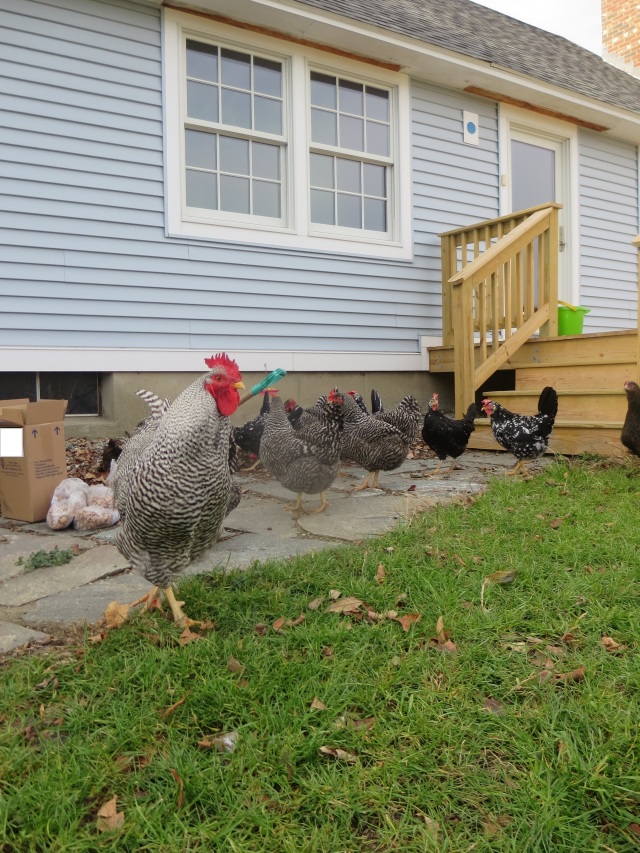
Read on for a quick and efficient way for one person to plant a thousand bulbs in a few hours, without a tractor, without digging up large patches of ground and without digging a thousand individual bulb holes. With the help of a half-dozen chickens and a toddler trying to ride my back like a pony, I planted a thousand crocus in four hours.We began by planting couple hundred crocus in a bed of hosta right next to the house… with the chickens for company.  That cardboard shipping box on the left side of the picture held 1,000 crocus bulbs: 10 packs of 100.
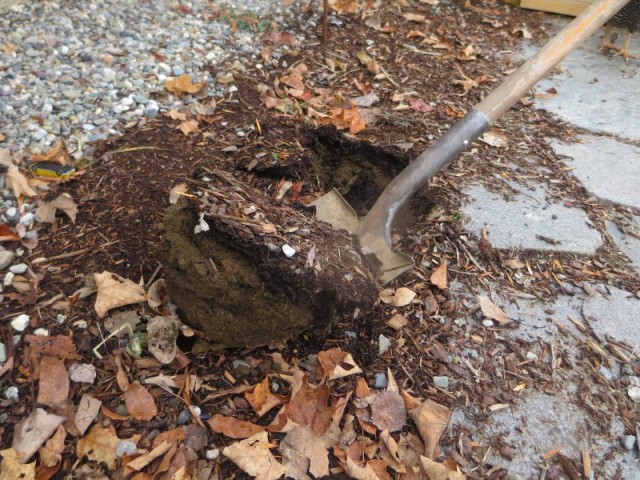
How to plant a thousand crocus? One shovel at a time! Took me about 4 hours with the Bean & Bantam method of mass bulb planting.

At the beginning, I dug and planted individual shovel clumps within an already established perennial  bed of hosta.  Crocus are planted at a depth of four inches, so an angled spade-depth clump at a time was just about right. This method works well when you are planting within an established perennial bed and know where the plants are, so that you can plant bulbs and crocus around established plants. it was pretty slow though, and I started thinking the best way to plant thousand bulbs was to GIVE SOME AWAY.  But, about an hour in, I developed a better method, keep reading.

Crocus is one of the first things to bloom in Vermont.  I wanted some near the door where we enter the house, to view close up: so the 200-ish were planted in the hosta bed.  I looked at the remaining 800 and sighed a little. Onwards.

I planted another hundred in a second perennial bed of plum trees and flowers along the driveway. I did a scattered planting underneath the apple trees, a shovelful here and there.
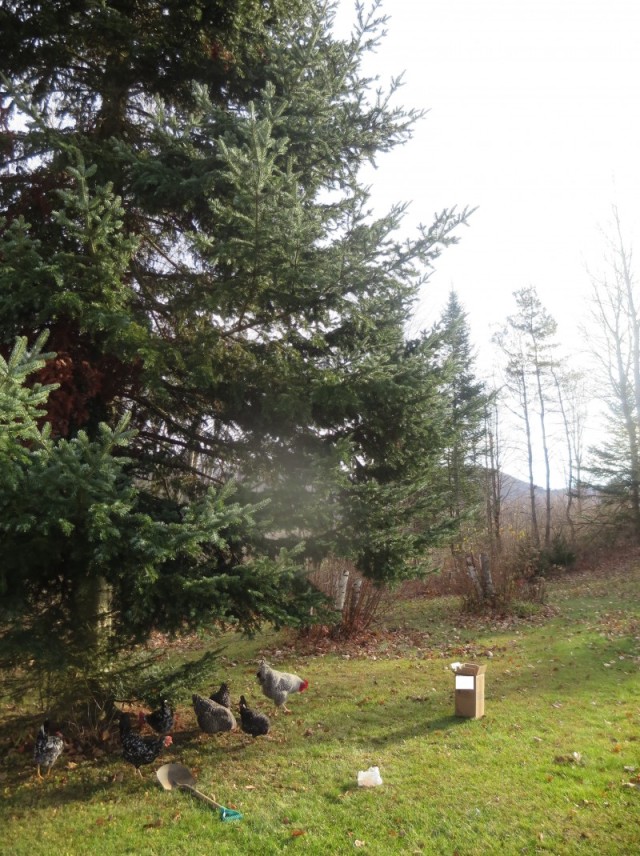
Read on for a quick and efficient way for one person to plant a thousand bulbs in a few hours, without a tractor, without digging up large patches of ground and without digging a thousand individual bulb holes. With the help of a half-dozen chickens and a toddler trying to ride my back like a pony, I planted a thousand crocus in four hours.We then moved to the back yard, near a balsam fir tree we see from the windows of the house.  The idea was to have a large sweep of crocus blooms visible from the house.  And it was down near the balsam fir that things really got cracking.  I developed, in this mad dash of crocus planting, a method.   I call it the Bean & Bantam Method for Planting Too Many Bulbs.  Edit: A reader has informed me that this is a long-established method of planting crocus.  I wish I had known sooner!
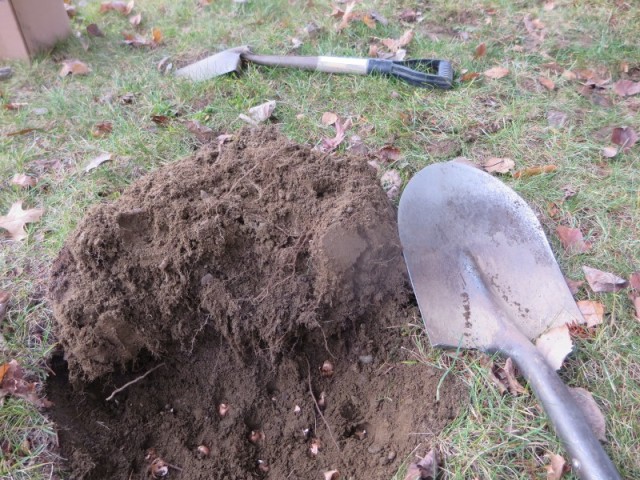
Plant bulbs efficiently and quickly using the Bean & Bantam method -- 1,000 crocus planted in four hoursThe Bean & Bantam Method for Planting Too Many Bulbs:

  1. Using a spade, cut a semi-circle or “c” shape in the sod approximately two feet across,
  2. Peel the sod back (use shovel as needed for leverage) towards the un-cut side,
  3. loosen soil at bottom to desired depth (depth was already correct at four inches for crocus, larger bulbs such as daffodils may require a few more inches),
  4. plant bulbs (pointed side up!), here I planted about 20 crocus per semi-circle
  5. loosen soil from bottom of sod onto planted bulbs,
  6. roll soil back onto planted bulbs so that sod is once more in place,
  7. tamp sod down–I prefer to tamp by stamping the edges and throwing in some dancing (I have music via headphones when I garden) but to each their own (my neighbors probably laugh for days).

And there you have it.  I stopped thinking about giving bulbs away to others to plant, I was in this, and I was going to get ALL the bulbs planted, a semi-circle of sod at a time.  It became fun, and I look forward to sweeps of crocus come spring, a thousand bulbs planted in a few hours, with music, and chickens, and a toddler trying his best to help.
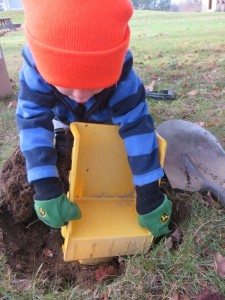
IMG_0522

Help is always good, although… not always helpful.

Tip: when planting bulbs in the lawn, plant several semi-circles in swaths so you can mow around them.  Crocus can be mown earlier than larger-leaved and later bulbs like daffodils, but naturalized swaths of daffodils or other bulbs in semi-wild areas of lawn could be established by this method.  If you wish to eliminate the grass I would recommend mulching once planted.  We did not mulch: we will mow around these crocus until the leaves have yellowed.

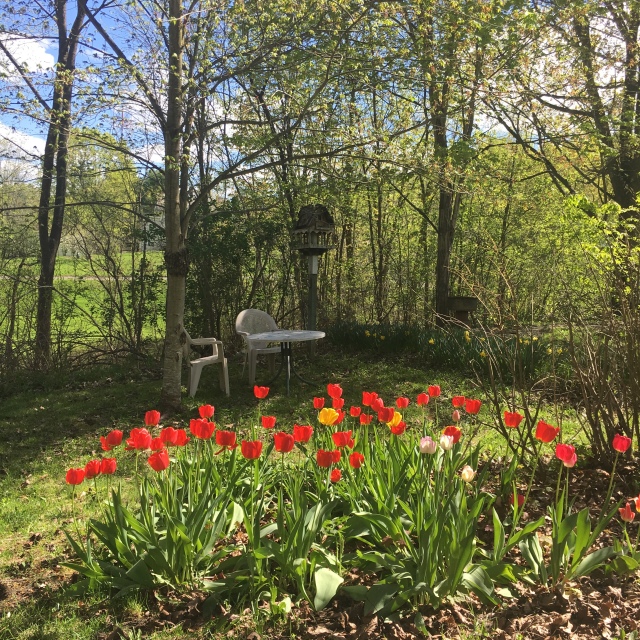
My thousand crocus are waiting under the ground for spring, and will be among the earliest blooms for bees.  A thousand blooms, a colorful spring, a task that took a little effort over a few hours and over time will multiply as crocus do, and last for years.

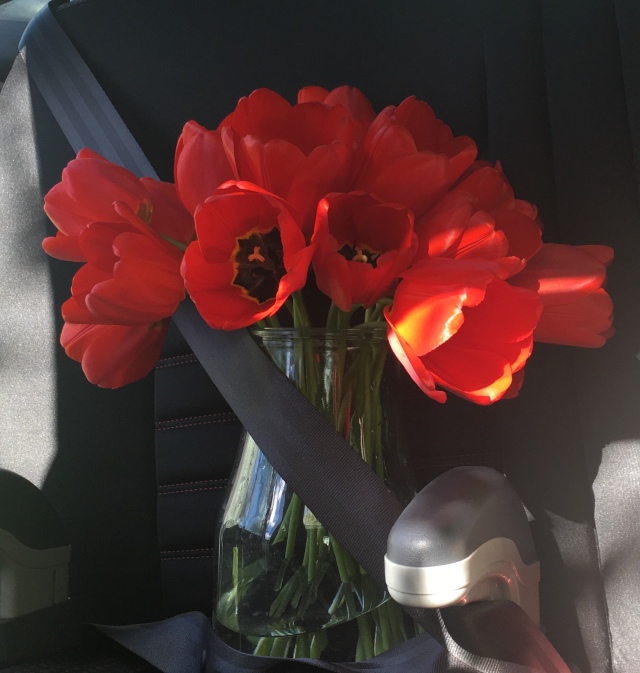
A thousand bright blooms, simple as a smile.  Random thought: a thousand smiles over the year is 2.739726 per day.  Skip Mondays and it’s 3.1948881. So get smiling, and plan some some bulb planting; both are good investments in happiness.img_1433
img_1429

Postscript due to comment from There’s More Than One Way to Be Real:

Curiously, the symbol for 1,000 in ancient times, was also close to the symbol for pi:

Meanwhile, 1000 was a circled or boxed X: Ⓧ, ⊗, ⊕, and by Augustinian times was partially identified with the Greek letter Φ phi. Over time, the symbol changed to Ψ and ↀ. The latter symbol further evolved into ∞, then ⋈, and eventually changed to M under the influence of the Latin word mille “thousand”.” from Wikipedia.

And also the symbol for the golden ratio, “Since the 20th century, the golden ratio has been represented by the Greek letter φ (phi, after Phidias, a sculptor who is said to have employed it)…”  from Wikipedia.

Interesting!

 Shared on The Chicken Chick’s Clever Chicks Blog Hop#173


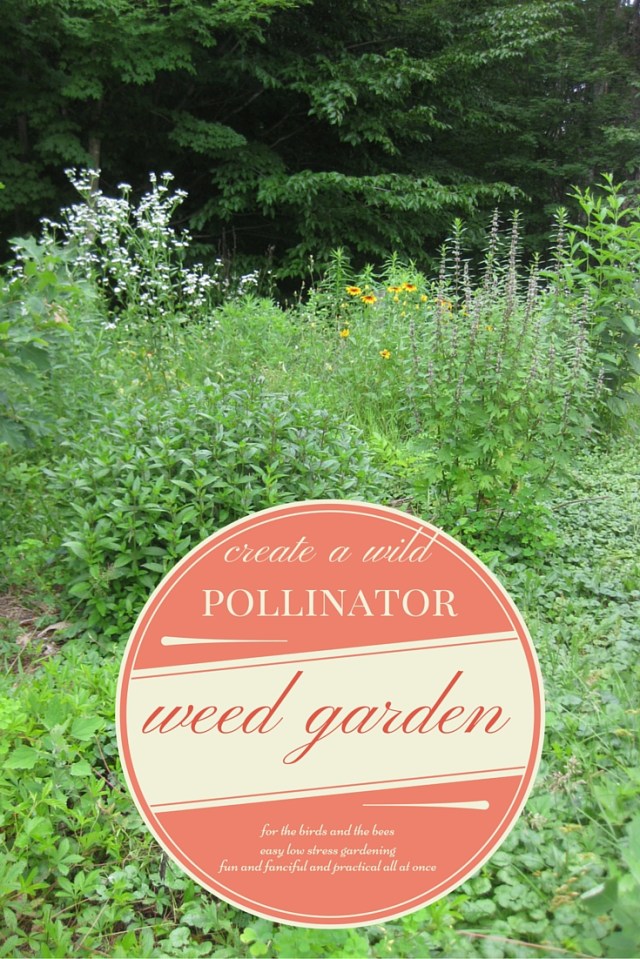
Creating a Natural Wild Pollinator Garden (or How I became a Weed Queen with a Wild Garden)

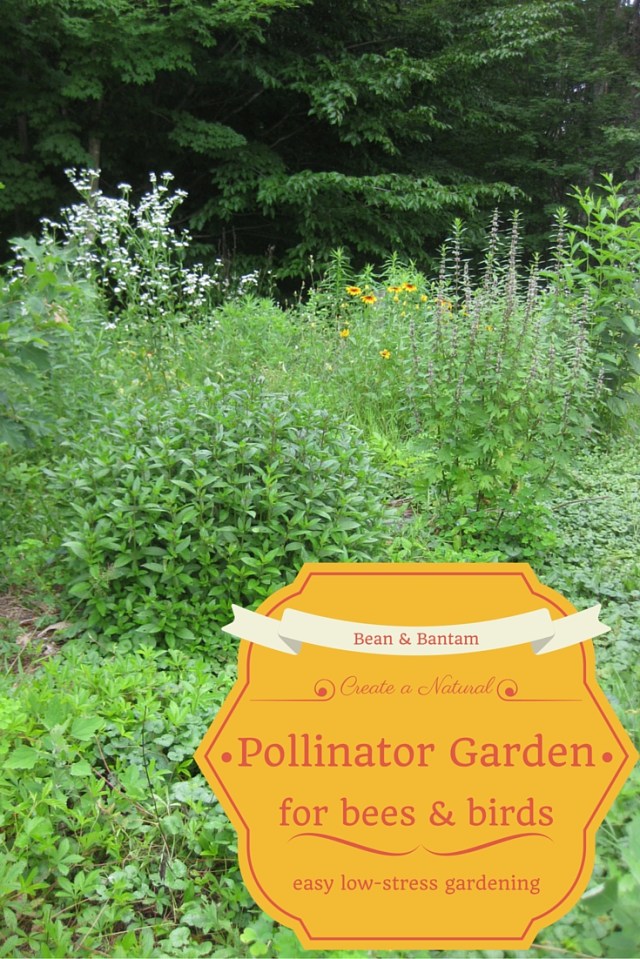
Create a natural pollinator garden for the bees & birds; an easy low-stress gardening method of cultivating and creating a new garden that helps wild pollinators like birds and bees, provides them with habitat and pollen and nest areas. Bean & Bantam blog post about how I created my own pollinator garden.

weeds and wildflowers are beneficial to pollinators and planting a pollinator garden can assist wild pollinators

The bee yard has become a wild garden, a place where I experiment with growing, a place where chocolate mint and roses and yew battle with weeds, and where I harvest unwanted weeds for the chickens, but leave the pleasing ones to grow on as a pollinator garden for beneficial insects and wild pollinators.

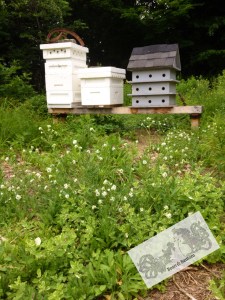
It all began some years ago… we cleared a spot on the edge of the woods of brambles and trees for a bee yard, a level area of about twenty by forty feet.  At the time it was cleared, the earth was scraped clean of forest duff by the tractor (not my idea) and compacted by the wheels of that same tractor as it was scraped and rolled over and leveled with the tractor bucket.  I put down some hay to keep the weeds down, free from down the road.  This hay had been put in the barn so long ago that they twine around the bales had come apart, or had never been baled. Eventually, the hay made the ground beneath softer and easier to work, after a season or so of roots and earthworms working. This hay, loaded with seeds from a long ago field, would also be the source of many of the plants I ended up cultivating in this wild pollinator garden.

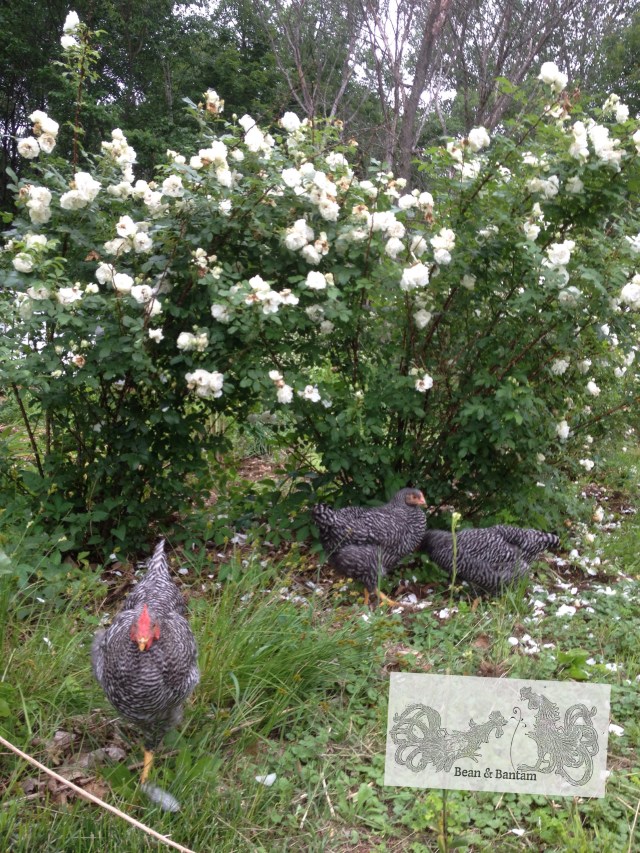
White roses at the front of the bee yard (now a Wild Garden)
White roses at the front of the bee yard (now a Wild Garden of weeds, where I experiment with creating a garden from volunteer plants, edited to remove those that I don’t like)

Despite the initially tough condition of the cleared area, I planted some white roses in a line at the front to form a blooming hedge where the lawn met this space, and edged the other three sides with yew, an evergreen that grows slowly, but forms a good hedge once established.  I wanted defined edges to this garden, and the roses and the yew formed a defining edge, a border that pleased me and created the bones of the garden. In the middle of this garden, I set the beehives.

I battled compacted ground and tree roots.  In the old hay used as a mulch, I planted chocolate mint, and some pineapple mint in the hopes it would spread and to repel ants from the bee hives. I threw in some thyme, and some chives.  A red climbing rose towards the back, to contrast eventually with the yew and the shadows of the beech and oak woods at the rear.

The bees buzzed happily all spring, summer, and fall, and I heard them very much alive in the winter, but they were silent the following spring.  The roses, the yew, the mint and the thyme and chives came back this spring, and the mint is spreading nicely.  I know it can take over and spread further than it might be wanted, but it has plenty of room to roam here, far from any other gardens.

As I went through the bee yard in the spring, I treated it as a prime source of weeds to compost in the chicken pen, and to supplement the chickens’ feed.  As I removed weeds, I noticed some that were actually very pleasing, and the contrast of some leaves and colors and textures was interesting.  I began to keep some with nice shapes or flowers, in the large areas not yet planted.

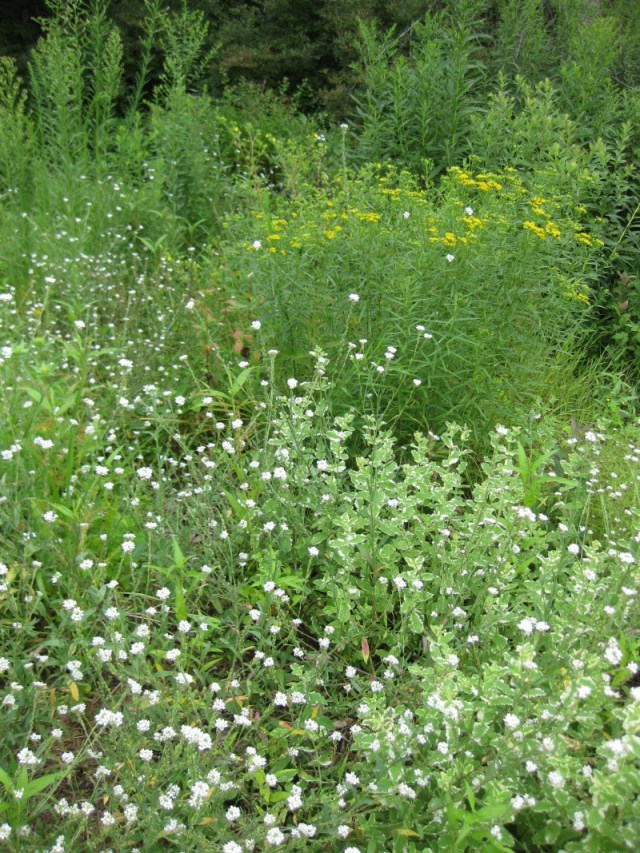
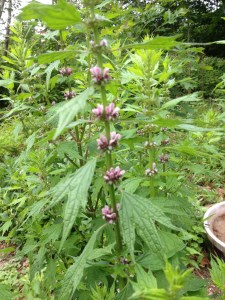
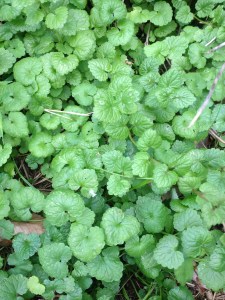
Without even realizing it, I was creating a pollinator garden, a place where insects could find a place to nest and a place to gather pollen, something that grows ever scarcer as people compulsively tidy the edges of gardens and fields and those wild places where pollinators have been surviving on the edges. I began to think a garden could evolve in the bee yard from happen-chance.  I noticed some volunteer white yarrow, motherwort, yellow rudbeckia, white campion, chickweed‘s small white starry flowers, purple flowering creeping charlie, veronica, sulphur cinquefoilyellow sorrel, a white flowering something I haven’t identified yet, and some very pleasing clumping grasses.  The combination of some textures and colors and shapes was, in spots, quite pleasing.  In researching the names, I find most are medicinal or have a history of having been used as remedies for one thing or another.  Interesting.

Yellow sorrel and I think a grass known as carex scoparia (clump forming) gone to seed
Yellow sorrel and I think a grass known as carex scoparia (pointed broom sedge) gone to seed, identification tip thanks to A Really Small Farm
IMG_4493
Chickweed and variegated mint

I yanked any weeds that weren’t fitting in, or pleasing (smartweed and dock and plantain, to the chickens!! raspberry canes, to the woods on the other side of the hedge! volunteer birch and beech seedlings, to the chickens! dockweed, to the chickens!) and let the garden fill in, all those remaining weeds developing, but easily subject to revision with a yank here or there.

I managed to select out a pleasing garden from what came up, and from what continues to come up, those seeds from ancient hay, or brought in by birds and the wind, or uncovered from scraping off the forest duff a few years ago.  I select, and then wait, and watch, and anticipate shapes and forms and yank or pull certain plants when things don’t turn out.  And anything yanked gets hauled to the chickens, or to the compost bin in the chicken pen (to the chickens! to the chickens! all these riches to the chickens!).


IMG_4719

It’s really very satisfying gardening, cultivating a large garden of mainly weeds.  Always evolving, and fairly low expectations, easily fit into spare time. If ever there was a low-stress, low-pressure activity with a long-term outlook, it would be cultivating a wild pollinator garden of mainly weeds.  It makes me almost embarrassed to have enough space to have a garden devoted to experimenting with weeds.  It seems frivolous, the abundance of space and the effort, but it holds my interest, to create something out of generally unwanted weeds, a garden without the expense of purchased plants, order out of chaos.  Plus, the chickens are big fans of the weeds I do yank out.  This wild and weedy gardening would not be half as fun without those chickens eating what I pull out.  So I play in the wild garden, like a kid, imagining myself queen of the weeds, with enough space and time to experiment, to wait, anticipate, and to create.  Unexpectedly enjoyable, and enough so to keep at it, on top of full time work and family (I may spend my spare time frivolously, but I am a responsible person, really, I am).

IMG_4496

I Googled “weed garden” to see if anyone was doing this–oops, not that weed. I found some people are planting pollinator gardens,  and I also had much more luck in searching for “wild garden.” I found a book called “The Wild Garden” written by William Robinson in 1870 and now reissued by Timber Press, about using locally adapted plants to create gardens and it’s next on my reading list, along with a good plant/herb identification guide.  Another resource is “Dream Plants for the Natural Garden” by Henk Gerrittsen and Piet Oudolf, a book I received as a gift, filled with tough plants that can hold their own in a natural setting, with other plant competitors. If I decide to add in more plants, I’d like to add in some woodland anemone, and also some borage.  I imagine it sometimes as a sort of  battle royale of tough plants that can compete with one another and form a pleasing wild garden.

Although the bee yard is quiet; no bees this year, we are on a list to get some hardier bees next spring from Kirk Webster of Middlebury, Vermont.

And finally, a weeding tip:  it is far easier to yank a weed out by the roots when the soil is fairly moist, as the roots come free more easily.

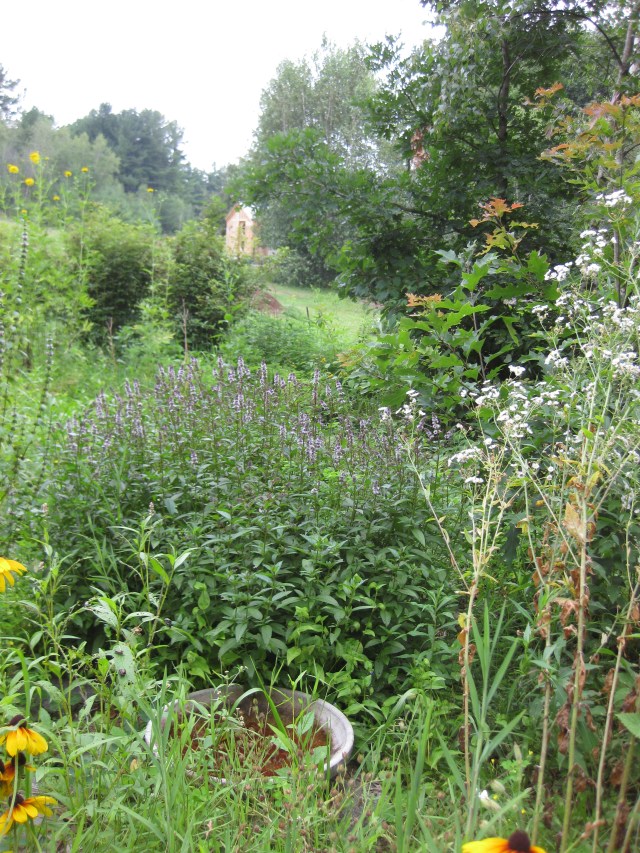
flowering mint and black eyed susan and another flowering weed in the wild pollinator garden, with a view of the chicken coop in the background
IMG_3734
possibly young raspberries, generally yanked
IMG_3733
Sulphur cinquefoil, flowers yellow
IMG_4503
L to R: mint, motherwort, unidentified white flowering weed, rudbeckia, unidentified weed, and creeping charlie in foreground
IMG_3735
Some clump forming grass in my weed garden…
The Bee Yard has become a weed garden, a wild garden of selected weeds.
The bee yard is quiet now
a pollinator garden is useful to beneficial insects and a pleasure to maintain, low-pressure gardening at its best
Rudbeckia
motherwort in the pollinator garden
motherwort
creeping charlie as a ground cover in the pollinator garden
I have always called this ajuga, but it may be creeping charlie, a slightly different plant.
chickweed and variegated mint in the pollinator garden
Chickweed and variegated mint, possibly pineapple mint
Editor note: This post has been updated to include new photos, and identification of a few plants I wasn’t familiar with, thanks in part to help from http://areallysmallfarm.com/ which should be your next stop (after this post) .  All errors in identification are my own!


Enter your email address to subscribe to this blog and receive notifications of new posts by email.

SPECTACULAR

Create a natural pollinator garden for the bees & birds; an easy low-stress gardening method of cultivating and creating a new garden that helps wild pollinators like birds and bees, provides them with habitat and pollen and nest areas. Bean & Bantam blog post about how I created my own pollinator garden.